Showing posts with label Vocational Expert. Show all posts

Wednesday, May 2, 2012

Choosing a Career Before College

My occupation requires me to counsel people in their vocational paths and help them achieve their occupational goals. Typically when I see people, they have already worked for several years and need to be retrained or returned to a different career that involves a less physical type of activity. Almost everyone wants to attend a training program to learn something different.


Training programs of all types are available for people; on-line, night classes, two-year, four-year and correspondence courses to name a few. Narrowing down these option is something that I struggle with as I work with my clients, and I am considered a professional. To do this for yourself without professional help, it is important to gain knowledge about the potential jobs and educational paths.


I believe there needs to be a system in place that allows students in high school (or those looking at going back to school for re-training), to adequately research careers and the costs involved. According to any news source, college loan debt is at a disastrous level. 


Three initial steps should be considered when doing research on careers, and in any order:


A) Job Availability in Career Path, Following Completion of Training Program


In order to get an adequate feel for how employable your degree path will make you, it is important to look at the current economic conditions of an industry and future growth potential. This information is provided for free by the government, through the Bureau of Labor Statistics.


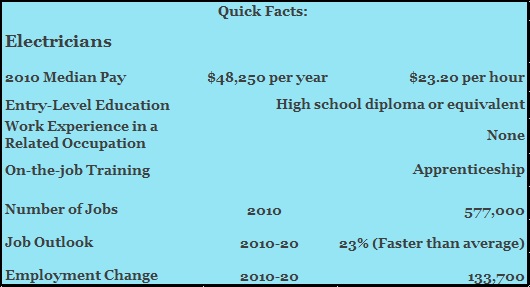
For instance, here's a job listing for Electrician and all of the information that it includes:


B) Career Research to Determine Fit for Interests, Salary Requirements, Abilities and Job Setting


Many people are attracted to jobs based on salary potential, but they often find that their interests do not always fall in line with those occupations. Some examples that I have heard from many people include Salesman and Attorney. In these occupations, stress and long hours can outweigh the potential at high earnings.


1) Informational Interviews


To find out more about a job, the best thing to do is talk to somebody who currently works in that field. One method I have done with Veterans to help with their choice of careers, is to have them call businesses and ask to talk to somebody in their field of choice. It may require some patience to get somebody on the phone, but people usually enjoy talking about their job . Firsthand knowledge is invaluable and you will likely learn more about the profession then you can find on the internet. You can gain inside knowledge for hiring practices, preferred colleges, and career outlook. Also creating networking connections that can be revisited once you graduate.


Here's a link that helps explain the process: http://www.quintcareers.com/informational_interviewing.html


2) Site Visits


A little tougher then just talking to somebody on the telephone, but you can get into a workplace and witness a job first-hand. To do this, contact businesses directly that offer occupations like the one you are hoping to find out about and just ask if you can tour the facility. Often businesses cater to students in ways they would not with other people, so tell the company that you are a student and you wish to see how a business operates.


3) Internships and Internet Research


If you are serious about a career, try an unpaid internship with a company. These are often offered during the summer around school breaks, and can lead to future employment if everything works out. Alternatively, if none of these options seem possible for you, check out websites that detail occupational options. One website offered by the Federal Government is Career InfoNet and links up with various other labor market data sources to provide a range of detailed information.


Other websites for Career Research:


http://careerkids.com/careers/        This site is youth-oriented and offers videos for some occupations
http://www.insidecareerinfo.com/    This site offers first-hand reviews of 285 different jobs
http://www.thecareerproject.org/    This site offers first-hand Q&A's with people in occupations


C) Discover Training Costs and Requirements


The variance in costs of training programs is extremely large, ranging from apprenticeships to four year private colleges. The cost for college seems to be ever-increasing, as does the resulting student loan debt. It would be assumed that salaries for college graduates are increasing at a similar rate, but that is not always the case. The college you attend does not determine tuition based on potential salary with your degree. It is increasingly important to make your college decisions with all of these factors in mind.


Here's a chart from CollegeBoard.org and their 2011 Trend in College Pricing:


Without a doubt, the four year college experience is going to cost a lot of money. There is cheaper options in terms of four year colleges, and that should be a factor when deciding when and where to earn your education.


There's a ton more to discuss on each of these topics and they will probably be broken down further in future posts. Please add any questions or suggestions in the comment section below.


-Jesse

Thursday, March 22, 2012

Determining Earning Capacity During a Divorce

The Vocational Expert has a role in Divorce proceedings that can save time and money for each side. While determining Spousal Maintenance, a Vocational Expert can be hired to conduct a Vocational Evaluation on either or both parties. This Vocational Evaluation is aimed at finding an earning capacity for the individual based on their education, work history and past earnings.


There are two basic methods the Vocational Expert uses to determine the Earning Capacity. The first method is to look at Actual Earnings. Second would be to determine the Potential Earning Capacity.


1. Actual Earnings


The Actual Earnings of a person allows the Vocational Expert the most amount of Face Validity possible in his or her report. The Earnings of a person are easily found in their tax records and from their previous employers, and are obvious evidence of Earning Capacity.


The argument that can be made against the Actual Earnings of an individual can be that the job is no longer available, or that the person would not be able to return to the same type of work and make a similar wage. The Vocational Expert must weigh this knowledge as they craft their report. For example, a plumber with an acquired back injury and lifting restrictions below 10 pounds, would not be able to return to work as a plumber.


Disability is one item that can limit the ability to use Actual Earnings to determine earning capacity, others include Age, and Geographical Locale.


2. Potential Earning Capacity


The Potential Earning Capacity of an individual is based on what the fair market value for their skills and abilities would provide. Essentially, even though a person may have never earned a dollar in their life, they may have the potential to earn.


To determine Potential Earning Capacity, the Vocational Expert weighs different information regarding the person's past. Education, Work History, Volunteer Work, and Hobbies can play a role in determining vocational possibilities.


Vocational Testing can be completed during a Vocational Evaluation that may help determine the skill and ability level of a person, or an interview and file review can be conducted. Often these methods are used together to produce a complete picture of a person and their Vocational Abilities. The report produced by the Vocational Expert needs to address how the individual's background would affect their Potential Earning Capacity.


For more information on determing Earning Capacity or to set-up a Vocational Evaluation, contact the experts at WRTWC.

Friday, March 9, 2012

Vocational Rehabilitation Counselors as Neutral Vocational Experts

Vocational Rehabilitation Counselors typically hold at least Master's degrees which enables them to work as counselors and evaluators with state and federal agencies, or in private practice. The experience of working as a Counselor, placing people in jobs and gaining familiarity with the vocational landscape, enables them to serve in court proceedings as a Vocational Expert.

Vocational Experts are able to testify in court cases that determine Earning Capacity such as in a divorce-maintenance dispute, changes in Earning Capacity in cases regarding injury, and presumed Earning Capacity in cases involving injury to children.

The Vocational Experts have a variety of tools at their disposal including vocational testing, work and educational histories, labor market information and their own experience with the job market. Above all else, the Vocational Expert is held by ethical standards to provide testimony as evidence that is neutral to both parties, despite being hired by only one of them.

The goal of the Experts at WRTWC is to provide testimony regardless of the source of our payment. By operating in this fashion, our experts have gained the trust of judges and have even been hired by both sides of divorce cases to produce Earning Capacity reports.


By striving to stay neutral and testify based on the facts of a case, our experts have been able to provide useful testimony that helps move cases toward a conclusion. Our testimony has proven to be helpful in divorce cases as it can save money for each party.  With neutral, fact-based testimony, our findings can be quickly accepted by both sides, without further argument.


If there is any questions you have regarding a case that may be require a vocational expert, please contact me at jesse.ogren@wrtwc.com, or at 612-353-5154.